Every organization needs a logo. But they don’t all understand the difference between their logo and their brand.
Your logo is a symbol that lays the foundation of your brand’s identity. It’s what people see. It becomes a visual trigger mechanism for your brand.
Your brand is what people feel. It occupies a unique space in their minds that transcends every tangible part of your business. And it holds real value beyond your physical assets and intellectual property.
Each brand begins with a promise. Brand equity (whether positive or negative) is based on your ability to deliver on it and the long-term brand loyalty it generates.
Statistics confirm that businesses with higher-quality branding gain greater market share and profitability than their inferior competition.
Apple can change their logo tomorrow and still be known for user-friendly technology, an ecosystem of products that work seamlessly together, and forward-thinking innovation. People will continue to pay a premium for their products.
Nike can drop their “swoosh” tomorrow and still own ambition and perseverance, a deep association with the world’s best athletes, and cultural relevance. People will continue to pay $100 or more for a pair of their sneakers.
BMW can redesign their mark today and still be identified with performance-driven lifestyles, prestigious luxury, and a heritage of great engineering. People will continue to aspire to take the wheel of “The Ultimate Driving Machine.”
These businesses each learned from the beginning the power of a consistent and meaningful brand strategy. They rightly prioritized their branding efforts as a long-game investment instead of just another expense. They spent years — even decades — developing track records of consistently high quality. They continue to adapt as their markets evolve. They’re always there for their customers. And the strength of their brands has allowed them to occasionally misstep without compromising long-term customer loyalty.
These brands have enviable reputations that even their competitors have come to envy and respect. And they are accumulating real brand equity driven by consumer perception, experiences, and loyalty.
- Nike’s brand is valued at $32 billion.
- BMW’s brand is valued at $55 billion.
- Apple’s brand is valued at a whopping $607 billion.
Why is branding important for small and medium-sized businesses?
It’s never too early to approach branding strategically, because it shapes your identity, builds credibility, and sets you apart from competitors from day one. Strong branding creates consistency across every touchpoint, encourages customer loyalty, and helps your business stand out instead of blending in as just another commodity. It elevates a basic product or service into a trusted, recognizable brand.
There’s a significant price to pay if you go cheap. You might think you’re saving money today, but the true cost will come tomorrow.
- You’ll lose trust from customers who can’t understand where you fit in their lives.
- You’ll undercut profits because you don’t look or feel premium.
- You’ll miss out on opportunities because you haven’t distinguished yourself from your competitors.
- You’ll spin your wheels and spend more money trying to make up for it all.
People buy the brands they believe in. These are the brands that connect with consumers on an emotional level. The brands that inspire them. The brands they go out of their way for and refer others to.
Strong branding lays the groundwork for building trust, communicating value, and justifying your price even before the first conversation. It makes people remember you when it matters most. It creates mind share that nobody can own but you. And it adds equity to your business.
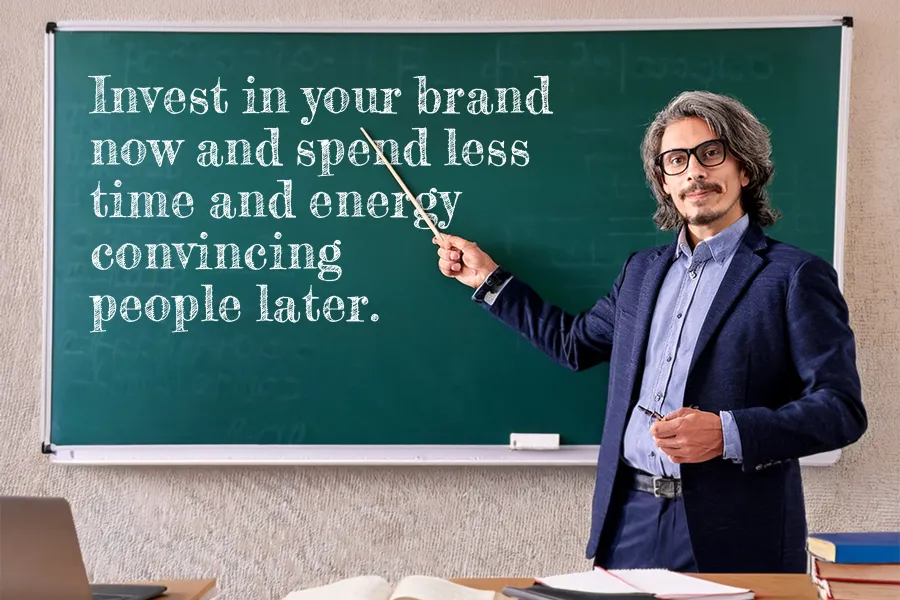
Invest in your brand now and spend less time and energy convincing people later. Otherwise, you’re just deferring the true cost of going cheap.
The bankruptcy courts are full of great ideas that were undermined by insufficient branding.
Contact us today and let’s turn this branding lesson into actionable steps to help you brand your organization to be its best.
Related Posts

Another do-it-yourselfer just got burned
You cannot do it all and do it all well. Nobody can. I certainly can’t. Instead, I’m spending my time doing what I do best to grow my business, make money, and hire seasoned professionals to help with the rest.
Why aren’t you?

The tagline: Your stake in the ground
The tagline is not about who you are or what you sell. It’s about them: your target audience. So, you better make sure it’s concise, direct and memorable, so they recall it the each time they hear your name.
See you in October
Making your own history doesn’t need big, dramatic moments. You just need to do what you said you’d do every time you step up to the plate.