
You seem to be great at what you do. You have a terrific product. Your media coverage has been impressive. You’ve been serving the industry for decades.
But, what does it mean to your customers? What’s in it for me?
Yes, all those points about your business are important. And, they’re certainly worth sharing. But, they each have a time and place. That time is not at the beginning of our conversation. That place is not at the top of your home page.
What I care about is how you solve my problem. Do you even know my problem? Do you know me?
You see, I can’t answer any of those questions if I’m reading only about you.
Keep in mind that I’m here because I’m needy. I need to feel an emotional — maybe even empathetic — connection in your message. I need to know that you understand me, my pain points and what keeps me up at night. And I need to believe that you can make my life easier.
I’m not getting it from, “We do this” and “We do that.”
Sure, we’ll eventually get around to you. But, we’ll never get there without first talking about me. So, for now, it’s all about me.
If your product does XYZ, why should it matter to me? What will I gain from it? What are my long-term benefits that transcend what you’re selling?
How should I view you differently than I view your competitors? If you’re offering widgets I can get just about anywhere, what do you bring to the table that adds extra value? (Here’s a tip: It’s not always about the price.) I might be willing to pay more for that little extra peace of mind. In fact, I might even pay a premium.
But, there’s more to it than that. Your marketing should engage me and make me want to learn more. If I find I’m learning from you, instead of just about you, my comfort level goes way up. And, I’m much more inclined to jump into your sales funnel.
I’d also like to hear your voice, not just read your words. Instead of dry product or service descriptions, how about some personality in your marketing? If you’re excited about what you do, I should feel it coming through in your message and graphics. I could use some excitement. Remember, I’m looking for help. Let’s have a real conversation.
Oh, and those contact forms? Way too long.
Related Posts

The Island of California and the power of public persuasion
The mythical Island of California presents a great example of the power of public persuasion. Even without solid evidence, it became an accepted truth that took nearly a century to correct.

15 ways your website could be hurting your business … and what you can do about it
Even if you’ve been able to put a check mark next to that spanking-new website on your marketing to-do list, get out your eraser. Your work has only just begun. A successful website is never once-and-done.

If you’re not a risk-taker, you’re likely working for someone who is.
Ever get the sense that your competitors have a leg up on you? Maybe a secret to their success? Why is that? Are they smarter than you? Or are they just bolder?
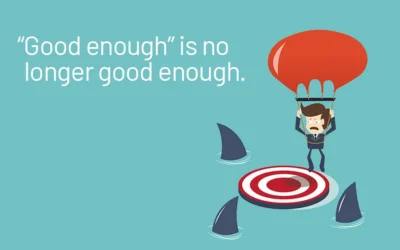
“Good enough” is no longer good enough.
Those who can harness new technology without losing sight of the basics, like branding and positioning, will be poised for greater success than those who find contentment with what they consider, “good enough.”

8 business blogging tips for marketers
Here are a few business blogging tips to help you begin to carve out your role, educate your customers, and distinguish your organization. Your blog should begin with a clearly defined purpose and follow best practices in order to maximize its effectiveness.

Five messages to avoid in your marketing
Common clichés, tired sales pitches, and unrealistic claims no longer work. In fact, they’ll likely be viewed as disingenuous and undermine your marketing efforts. Here, we’ve outlined five ineffective marketing messages and what you can do to avoid using them.